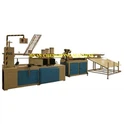
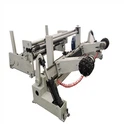
Hey there! As a supplier of Spiral Paper Core Winders, I often get asked about how much power these machines consume. It's a crucial question, especially for businesses looking to manage their energy costs and make sustainable choices. In this blog, I'll break down the factors that influence the power consumption of a Spiral Paper Core Winder and give you a better idea of what to expect.
First off, let's understand what a Spiral Paper Core Winder is. It's a key piece of equipment in the Paper Core Production Line. These machines are used to wind paper into spiral-shaped cores, which are then used in a variety of industries, such as packaging, textiles, and printing. The Spiral Paper Core Winder is designed to be efficient and reliable, but like any machine, its power consumption can vary based on several factors.
Factors Affecting Power Consumption
Machine Size and Capacity
One of the biggest factors that affects power consumption is the size and capacity of the Spiral Paper Core Winder. Larger machines with higher production capacities generally require more power to operate. This is because they have bigger motors, more moving parts, and can handle larger rolls of paper. For example, a small, tabletop Paper Tube Winding Machines used for small-scale production might consume around 1 - 2 kilowatts (kW) of power. On the other hand, a large industrial Spiral Paper Core Winder used in a high-volume manufacturing facility could consume anywhere from 5 - 10 kW or even more.
Operating Speed
The speed at which the Spiral Paper Core Winder operates also plays a significant role in power consumption. When the machine is running at a higher speed, it requires more energy to drive the motors and move the paper through the winding process. If you're running your machine at maximum speed for long periods, you'll notice a higher power consumption compared to running it at a lower, more moderate speed. However, it's important to find a balance between speed and power consumption, as running the machine too slowly might not be cost-effective in terms of production output.
Paper Thickness and Material
The type of paper being used and its thickness can impact power consumption. Thicker papers require more force to wind, which means the machine has to work harder and use more power. Additionally, some papers might be more difficult to handle due to their texture or composition. For example, papers with a high fiber content or a rough surface might require more energy to feed through the machine and wind into a core.
Machine Efficiency
The efficiency of the Spiral Paper Core Winder itself is another crucial factor. A well-maintained and properly calibrated machine will generally consume less power than one that is in poor condition. Regular maintenance, such as cleaning, lubricating, and replacing worn-out parts, can help ensure that the machine runs smoothly and efficiently. Modern Spiral Paper Core Winders are designed with energy-efficient features, such as variable frequency drives (VFDs), which can adjust the motor speed based on the load, reducing power consumption.
Calculating Power Consumption
To get a rough estimate of the power consumption of a Spiral Paper Core Winder, you can use the following formula:
Power Consumption (kWh) = Power Rating (kW) x Operating Hours
For example, if your Spiral Paper Core Winder has a power rating of 3 kW and you run it for 8 hours a day, the daily power consumption would be:
3 kW x 8 hours = 24 kilowatt-hours (kWh)
Keep in mind that this is just a basic calculation, and the actual power consumption might vary depending on the factors mentioned above.
Real - World Examples
Let's take a look at some real-world examples to give you a better idea of power consumption. Suppose you have a medium-sized Spiral Paper Core Winder with a power rating of 4 kW. You run the machine for 6 hours a day, 5 days a week.
Daily power consumption = 4 kW x 6 hours = 24 kWh
Weekly power consumption = 24 kWh x 5 days = 120 kWh
If your electricity cost is $0.15 per kWh, the weekly cost of running the machine would be:
120 kWh x $0.15/kWh = $18
Over the course of a month (assuming 4 weeks), the cost would be $18 x 4 = $72.
Tips to Reduce Power Consumption
Optimize Operating Speed
As mentioned earlier, finding the right operating speed can help reduce power consumption. Experiment with different speeds to see what works best for your production needs without sacrificing too much output.


Use Energy - Efficient Papers
Choose papers that are easier to wind and require less energy. This might involve working with your paper supplier to find the most suitable paper for your Spiral Paper Core Winder.
Regular Maintenance
Make sure to follow the manufacturer's maintenance schedule. This includes cleaning the machine, checking the belts and pulleys, and replacing any worn-out parts. A well-maintained machine will run more efficiently and use less power.
Upgrade to Energy - Efficient Equipment
If your Spiral Paper Core Winder is old and inefficient, consider upgrading to a newer model with energy-saving features. Modern machines are designed to be more energy-efficient, which can save you money in the long run.
Conclusion
So, how much power does a Spiral Paper Core Winder consume? Well, it depends on several factors, including machine size, operating speed, paper type, and machine efficiency. By understanding these factors and taking steps to optimize power consumption, you can reduce your energy costs and make your production process more sustainable.
If you're in the market for a Spiral Paper Core Winder or want to learn more about how to reduce power consumption in your paper core production line, don't hesitate to reach out. We're here to help you make the best choices for your business.
References
- General knowledge about paper core production machinery
- Industry reports on energy consumption in manufacturing processes