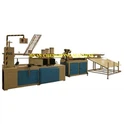
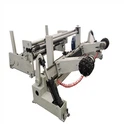
In today's highly competitive manufacturing landscape, enhancing the production flexibility of a paper core production line is crucial for businesses aiming to meet diverse customer demands, adapt to market changes, and stay ahead of the curve. As a leading supplier of Paper Core Production Lines, I understand the challenges and opportunities that come with optimizing production processes. In this blog post, I will share some practical strategies and insights on how to increase the production flexibility of a paper core production line.
Understanding the Importance of Production Flexibility
Production flexibility refers to the ability of a manufacturing system to quickly and efficiently adjust to changes in product specifications, production volumes, and production schedules. In the paper core industry, where customer requirements can vary widely in terms of core diameter, length, wall thickness, and paper material, having a flexible production line is essential for delivering high-quality products on time and at a competitive price.
A flexible production line allows manufacturers to:
- Respond to customer demands: By quickly adjusting production parameters, manufacturers can produce paper cores that meet the specific requirements of each customer, improving customer satisfaction and loyalty.
- Reduce lead times: With the ability to switch between different product configurations quickly, manufacturers can reduce the time it takes to deliver products to customers, gaining a competitive edge in the market.
- Optimize production efficiency: By minimizing setup times and changeovers, manufacturers can increase the overall productivity of the production line, reducing costs and improving profitability.
- Adapt to market changes: In a dynamic market environment, having a flexible production line enables manufacturers to quickly respond to changes in customer preferences, market trends, and regulatory requirements, ensuring the long-term viability of the business.
Strategies for Increasing Production Flexibility
1. Invest in Advanced Equipment
One of the most effective ways to increase the production flexibility of a paper core production line is to invest in advanced equipment that offers greater versatility and automation. Modern paper core production lines are equipped with state-of-the-art technology that allows for precise control of production parameters, such as core diameter, length, and wall thickness, as well as the ability to handle a wide range of paper materials.
For example, the Toilet Paper Core Machine is designed specifically for the production of toilet paper cores, offering high-speed production, accurate sizing, and excellent quality control. Similarly, the Parallel Paper Core Making Machine is capable of producing multiple paper cores simultaneously, increasing production efficiency and flexibility.


By investing in advanced equipment, manufacturers can not only improve the quality and consistency of their products but also reduce the time and effort required to set up and change over the production line, enabling them to respond more quickly to customer demands.
2. Implement Modular Design
Another strategy for increasing production flexibility is to implement a modular design approach in the paper core production line. Modular design involves dividing the production line into smaller, self-contained modules that can be easily reconfigured or replaced to accommodate different production requirements.
For example, a paper core production line may consist of modules for paper feeding, gluing, winding, cutting, and finishing. By designing these modules to be interchangeable and compatible with each other, manufacturers can easily add or remove modules as needed, allowing for greater flexibility in production.
In addition, modular design also simplifies maintenance and repair tasks, as individual modules can be easily removed and replaced without affecting the operation of the entire production line. This reduces downtime and improves the overall reliability of the production line.
3. Adopt Lean Manufacturing Principles
Lean manufacturing is a systematic approach to production that focuses on eliminating waste, improving efficiency, and maximizing value for the customer. By adopting lean manufacturing principles in the paper core production line, manufacturers can streamline their processes, reduce lead times, and improve production flexibility.
Some key lean manufacturing principles that can be applied to the paper core production line include:
- Value stream mapping: This involves identifying and analyzing the entire value stream of the production process, from raw material procurement to finished product delivery, to identify areas of waste and inefficiency.
- Just-in-time (JIT) production: This involves producing only what is needed, when it is needed, and in the quantity required, to minimize inventory levels and reduce lead times.
- Continuous improvement: This involves constantly seeking ways to improve the production process, eliminate waste, and increase efficiency through the use of tools such as Kaizen, Six Sigma, and Total Quality Management (TQM).
By adopting lean manufacturing principles, manufacturers can create a more flexible and responsive production system that is better able to meet the changing needs of the market.
4. Train and Empower Employees
Employees are the most valuable asset of any manufacturing business, and their skills and knowledge play a crucial role in the success of the production line. By providing comprehensive training and development opportunities for employees, manufacturers can enhance their skills and capabilities, enabling them to operate the production line more efficiently and effectively.
In addition, manufacturers should also empower employees to make decisions and take ownership of their work, encouraging them to identify and implement improvements in the production process. This not only improves employee morale and engagement but also leads to a more flexible and innovative production system.
5. Establish Strong Supplier Relationships
In the paper core industry, the quality and availability of raw materials can have a significant impact on the production process. By establishing strong relationships with reliable suppliers, manufacturers can ensure a steady supply of high-quality raw materials, reducing the risk of production delays and quality issues.
In addition, manufacturers should also work closely with their suppliers to develop new and innovative materials that can meet the changing needs of the market. This can help to differentiate the manufacturer's products from those of their competitors and increase their production flexibility.
Conclusion
Increasing the production flexibility of a paper core production line is essential for businesses aiming to remain competitive in today's dynamic market environment. By investing in advanced equipment, implementing modular design, adopting lean manufacturing principles, training and empowering employees, and establishing strong supplier relationships, manufacturers can create a more flexible and responsive production system that is better able to meet the changing needs of the market.
If you are interested in learning more about how our Paper Core Production Line can help you increase the production flexibility of your business, please do not hesitate to contact us. Our team of experts is dedicated to providing you with the best solutions and support to help you achieve your production goals.
References
- Womack, J. P., & Jones, D. T. (1996). Lean Thinking: Banish Waste and Create Wealth in Your Corporation. Simon & Schuster.
- Liker, J. K. (2004). The Toyota Way: 14 Management Principles from the World's Greatest Manufacturer. McGraw-Hill.
- Ohno, T. (1988). Toyota Production System: Beyond Large-Scale Production. Productivity Press.