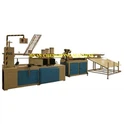
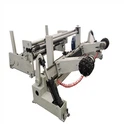
A paper core making machine is a sophisticated piece of equipment used in the manufacturing of paper cores, which are essential components in various industries such as textiles, paper, plastics, and packaging. As a leading supplier of paper core making machines, I am well - versed in the main components that make up these machines. Understanding these components is crucial for both potential buyers and those interested in the manufacturing process.
1. Unwinding Unit
The unwinding unit is the starting point of the paper core making process. Its primary function is to hold and feed the paper rolls smoothly into the machine. There are different types of unwinding units, including single - roll unwinders and multi - roll unwinders.
A single - roll unwinder is suitable for small - scale production or when a single layer of paper is required for the paper core. It holds one paper roll and releases the paper steadily. On the other hand, multi - roll unwinders can handle multiple paper rolls simultaneously. This is useful when manufacturing paper cores with multiple layers of paper, which can enhance the strength and durability of the final product.
The unwinding unit is equipped with tension control systems. These systems ensure that the paper is fed at a consistent tension. If the tension is too high, the paper may break; if it is too low, the paper may wrinkle, leading to an uneven paper core. Some advanced tension control systems use sensors to detect the tension and automatically adjust it to the optimal level.
2. Gluing System
The gluing system is responsible for applying adhesive to the paper. A high - quality gluing system is essential for creating strong and reliable paper cores. There are several types of gluing methods, such as roller gluing and spray gluing.


Roller gluing is a common method. In this process, two rollers are used. One roller is partially submerged in the adhesive tank, and as it rotates, it picks up the adhesive. The other roller then transfers the adhesive evenly onto the paper. Roller gluing provides a uniform layer of adhesive, which is important for the bonding strength of the paper layers.
Spray gluing, on the other hand, uses nozzles to spray the adhesive onto the paper. This method is more suitable for applications where a thinner layer of adhesive is required or when a more precise application is needed. The adhesive used in the gluing system can vary depending on the type of paper and the end - use of the paper core. Common adhesives include starch - based adhesives, synthetic adhesives, and water - based adhesives.
3. Core Winding Unit
The core winding unit is the heart of the paper core making machine. This unit winds the glued paper around a mandrel to form the paper core. The winding process can be either parallel winding or spiral winding.
In parallel winding, the paper is wound around the mandrel in a straight, parallel manner. This type of winding is often used for making cores with a high degree of precision, such as those used in the textile industry. Parallel winding machines can produce paper cores with consistent diameters and wall thicknesses. You can learn more about parallel winding machines by visiting our Parallel Paper Core Making Machine page.
Spiral winding, on the other hand, winds the paper around the mandrel in a spiral pattern. Spiral - wound paper cores are more flexible and can be used in a wider range of applications, including packaging. The winding speed and tension in the core winding unit are carefully controlled to ensure the quality of the paper core.
4. Cutting Unit
Once the paper core has been wound to the desired length, the cutting unit comes into play. The cutting unit cuts the continuous paper core into individual cores of the required length. There are different types of cutting methods, such as saw cutting and knife cutting.
Saw cutting uses a circular saw blade to cut through the paper core. This method is suitable for cutting thick and hard paper cores. Knife cutting, on the other hand, uses a sharp knife to make the cut. Knife cutting is more precise and can be used for cutting thinner paper cores. The cutting unit is equipped with a measuring system to ensure that each paper core is cut to the correct length.
5. Ejection and Stacking Unit
After the paper cores are cut, the ejection and stacking unit removes the finished cores from the mandrel and stacks them for further processing or packaging. The ejection process can be either automatic or semi - automatic.
In an automatic ejection system, the paper cores are automatically pushed off the mandrel and transferred to the stacking area. This system is more efficient and reduces the need for manual labor. The stacking unit arranges the paper cores in an orderly manner, either in a single layer or in multiple layers. This makes it easier for the cores to be transported and stored.
6. Control System
The control system is the brain of the paper core making machine. It coordinates the operation of all the other components and ensures that the machine runs smoothly and efficiently. Modern paper core making machines are equipped with advanced control systems, such as programmable logic controllers (PLCs).
PLCs allow for precise control of various parameters, such as winding speed, tension, gluing amount, and cutting length. Operators can input the desired settings into the PLC, and the machine will automatically adjust its operation accordingly. The control system also includes safety features, such as emergency stop buttons and sensors that detect malfunctions. If a problem is detected, the machine will automatically stop to prevent damage and ensure the safety of the operators.
7. Drying System
In some cases, a drying system may be included in the paper core making machine. This is especially important when using water - based adhesives. The drying system removes the moisture from the adhesive, allowing the paper layers to bond more effectively.
There are different types of drying systems, such as hot air drying and infrared drying. Hot air drying uses heated air to blow over the paper core, evaporating the moisture. Infrared drying, on the other hand, uses infrared radiation to heat the adhesive directly, which is a more energy - efficient method.
As a supplier of paper core making machines, we offer a wide range of products to meet the diverse needs of our customers. Our Toilet Paper Core Machine is specifically designed for the production of toilet paper cores, with high - speed and precision performance. Our Paper Core Production Line provides a complete solution for large - scale paper core manufacturing, integrating all the necessary components for a seamless production process.
If you are interested in purchasing a paper core making machine or have any questions about our products, we encourage you to contact us for a detailed discussion. Our team of experts is ready to provide you with professional advice and support to help you choose the most suitable machine for your business.
References
- "Paper Core Manufacturing Technology" by John Smith, published by Paper Industry Press, 2018.
- "Advanced Paper Core Making Machines: Design and Operation" by Emily Johnson, published by Industrial Machinery Journal, 2020.