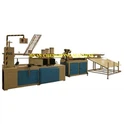
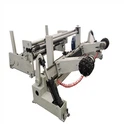
Hey there! As a supplier of Paper Core Making Machines, I often get asked about the materials used for the rollers in these machines. It's a crucial part of the whole setup, so let's dive right in and talk about it.
First off, why are the rollers so important? Well, in a paper core making machine, the rollers play a key role in guiding, pressing, and shaping the paper into the core. They need to be tough, precise, and able to handle the constant friction and pressure. Different types of paper core making machines, like the Spiral Paper Core Winder, Parallel Paper Core Making Machine, and Toilet Paper Core Machine, may have slightly different requirements for their rollers, but the basic principles remain the same.
One of the most common materials for rollers in paper core making machines is steel. Steel rollers are known for their strength and durability. They can withstand high pressures and heavy loads without deforming easily. This is especially important in machines that are used to make thick or large - diameter paper cores. For example, in a spiral paper core winder, the rollers need to apply enough pressure to wind the paper tightly around the mandrel to form a solid core. Steel rollers can handle this job with ease.
There are different types of steel used for rollers. Carbon steel is a popular choice because it's relatively inexpensive and has good mechanical properties. It can be heat - treated to increase its hardness and wear resistance. Stainless steel is another option. It's corrosion - resistant, which is great if the machine is used in a humid environment or if the paper being processed has some moisture content. Stainless steel rollers also have a smooth surface finish, which helps in getting a clean and uniform paper core.


Another material that's used is rubber. Rubber rollers are often used in combination with steel rollers. They provide a soft and flexible surface that can grip the paper without damaging it. In a paper core making machine, rubber rollers are usually used in the feeding and guiding sections. For instance, in a toilet paper core machine, the rubber rollers can gently guide the thin paper through the machine without causing any wrinkles or tears. Rubber rollers can also be adjusted to provide different levels of pressure, which is useful for handling different types of paper.
The type of rubber used for rollers can vary. Natural rubber has good elasticity and grip, but it may not be as resistant to wear and chemicals as synthetic rubbers. Neoprene is a synthetic rubber that's commonly used in paper core making machines. It has good resistance to oil, heat, and abrasion, making it suitable for the demanding conditions in a paper processing environment.
Ceramic is also an emerging material for rollers in paper core making machines. Ceramic rollers have a very hard and smooth surface. They offer excellent wear resistance and can provide a high - quality finish to the paper core. They are especially useful in machines that require high precision, such as parallel paper core making machines. The smooth surface of ceramic rollers helps in reducing friction and ensuring a consistent winding process. However, ceramic rollers are more expensive than steel or rubber rollers, and they need to be handled carefully to avoid breakage.
Now, let's talk about the factors that influence the choice of roller material. The first factor is the type of paper being processed. If the paper is thick and heavy, steel rollers may be the best choice. For thin and delicate paper, rubber rollers can be more suitable. The production speed of the machine is also important. High - speed machines require rollers that can handle the fast - paced operation without wearing out quickly. In such cases, materials like ceramic or heat - treated steel are preferred.
The environmental conditions in which the machine operates also play a role. If the machine is in a dirty or dusty environment, rollers with good wear resistance are needed. In a humid environment, corrosion - resistant materials like stainless steel or certain types of rubber are better.
Cost is always a consideration. Steel rollers are generally more affordable than ceramic rollers. However, you need to balance the initial cost with the long - term performance and maintenance requirements. A more expensive roller made of a high - quality material may save you money in the long run by reducing downtime and replacement costs.
In conclusion, the choice of roller material in a paper core making machine depends on a variety of factors, including the type of paper, production speed, environmental conditions, and cost. As a supplier of paper core making machines, we understand the importance of using the right materials for the rollers to ensure the best performance and quality of the paper cores.
If you're in the market for a paper core making machine or have any questions about the rollers or other components, don't hesitate to reach out. We're here to help you make the right choice for your business. Whether you need a Spiral Paper Core Winder, a Parallel Paper Core Making Machine, or a Toilet Paper Core Machine, we've got you covered. Let's start a conversation and see how we can meet your paper core production needs.
References:
- "Handbook of Paper Core Manufacturing"
- Industry reports on paper processing machinery