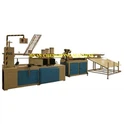
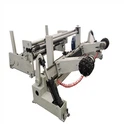
In the realm of paper processing and packaging industries, the Slitter Rewinder Machine stands as a pivotal piece of equipment. It plays a crucial role in converting large rolls of paper into smaller, more manageable rolls with specific widths. One of the most critical aspects that operators and manufacturers often grapple with is the relationship between the slitting width and the rewinding quality on a Slitter Rewinder Machine. As a supplier of Slitter Rewinder Machines, I've witnessed firsthand the importance of understanding this relationship to ensure optimal performance and product quality.

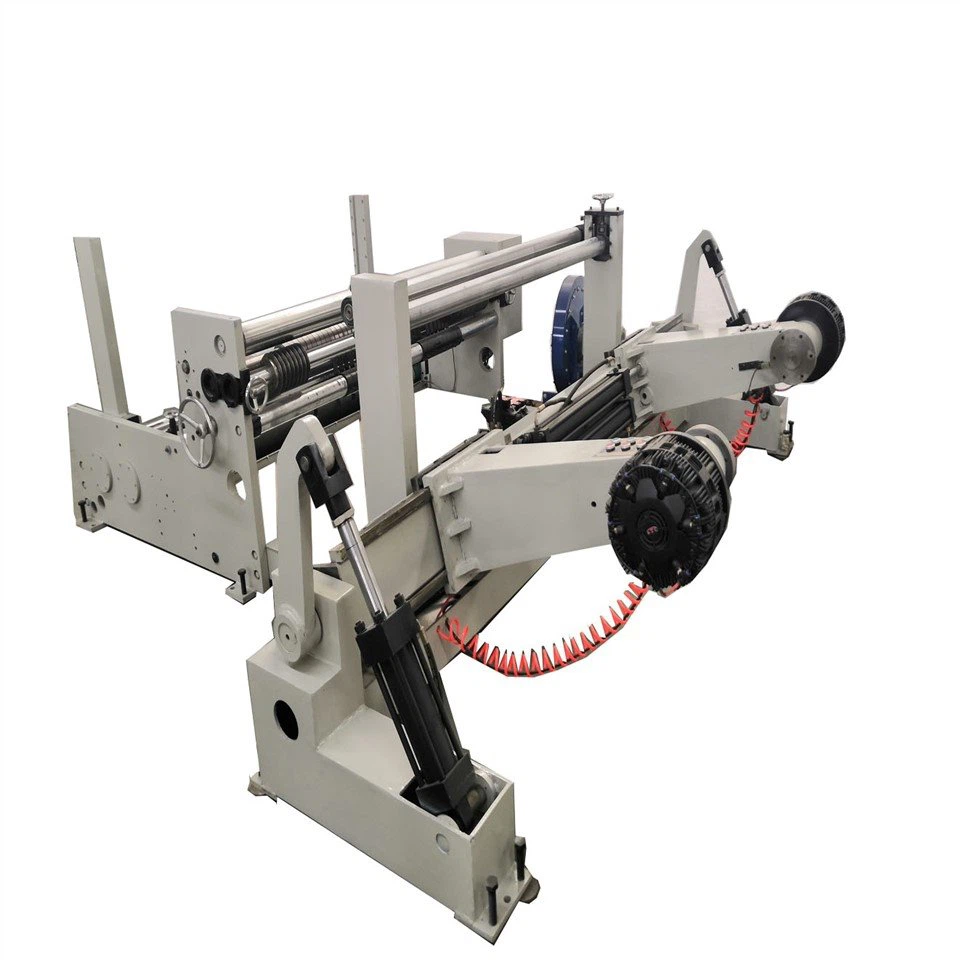
The Basics of Slitting Width
The slitting width refers to the width of the individual strips that are cut from the larger parent roll during the slitting process. This parameter is highly customizable and can be adjusted according to the specific requirements of the end - product. For instance, in the production of toilet paper rolls, the slitting width will be different from that of printer paper rolls.
The choice of slitting width is influenced by several factors. Market demand is a primary driver. If the market has a high demand for narrow - width paper products, such as certain types of tissue papers used in hotels or restaurants, the slitting width will be set accordingly. Additionally, the capabilities of the downstream processing equipment also play a role. If the subsequent machines are designed to handle a specific range of paper widths, the slitting width on the Slitter Rewinder Machine must be adjusted to match.
Impact of Slitting Width on Rewinding Quality
Tension Control
One of the most significant ways in which slitting width affects rewinding quality is through tension control. When the slitting width is too narrow, the tension distribution across the strip can become uneven. This is because the edges of the narrow strip are more prone to being affected by external factors such as friction from the slitting blades and the guiding mechanisms. Uneven tension can lead to problems such as wrinkling, telescoping, or even breakage during the rewinding process.
Conversely, if the slitting width is too wide, the machine may struggle to maintain consistent tension across the entire width of the strip. This can result in loose winding on one side and tight winding on the other, leading to poor - quality rewound rolls. Achieving the right balance in tension control is essential for producing high - quality rewound rolls, and the slitting width is a key factor in this equation.
Edge Quality
The slitting width also has a direct impact on the edge quality of the rewound rolls. When the slitting width is set correctly, the slitting blades can cut through the paper cleanly, resulting in smooth and straight edges. However, if the width is not optimized, the blades may not be able to cut the paper evenly. For example, a very narrow slitting width may cause the blades to exert excessive pressure on the paper, leading to frayed or jagged edges. On the other hand, a too - wide slitting width may result in incomplete cuts or rough edges. Poor edge quality not only affects the aesthetic appearance of the final product but can also cause problems in downstream processing, such as jams in printing or packaging machines.
Roll Formation
Proper roll formation is another aspect of rewinding quality that is closely related to the slitting width. A well - formed roll should have a consistent diameter and density throughout. If the slitting width is not appropriate, the roll may not form correctly. For narrow slitting widths, there is a higher risk of the roll collapsing or having an irregular shape due to the difficulty in maintaining uniform tension. In the case of wide slitting widths, the roll may be too bulky and difficult to handle, and it may also have issues with density distribution.
Strategies for Optimizing Slitting Width and Rewinding Quality
Machine Calibration
Regular machine calibration is essential for ensuring that the slitting width is set accurately and that the rewinding quality is maintained. This involves checking and adjusting the position of the slitting blades, the guiding systems, and the tension control mechanisms. By calibrating the machine regularly, operators can minimize the variations in slitting width and ensure that the rewound rolls meet the desired quality standards.
Material Testing
Before setting the slitting width for a large - scale production run, it is advisable to conduct material testing. Different types of paper have different physical properties, such as thickness, strength, and flexibility. By testing the paper with various slitting widths, operators can determine the optimal width that will result in the best rewinding quality. This can help to avoid costly mistakes and reduce waste.
Operator Training
Well - trained operators are crucial for achieving optimal slitting width and rewinding quality. Operators should be familiar with the operation of the Slitter Rewinder Machine, including how to adjust the slitting width, monitor the tension control, and troubleshoot common problems. By providing comprehensive training, suppliers can ensure that their customers' operators are able to make the most of the machine's capabilities and produce high - quality rewound rolls.
Real - World Applications and Case Studies
In the paper industry, there are numerous examples of how the relationship between slitting width and rewinding quality has a significant impact on production efficiency and product quality. For instance, a company that specializes in producing Jumbo Roll Slitter Rewinder Paper may need to adjust the slitting width based on the different sizes of toilet paper rolls they produce. By carefully optimizing the slitting width, they can reduce waste and improve the overall quality of their products.
Another example is a manufacturer of Paper Roll To Roll Slitting Machine who supplies machines to the label - printing industry. In this case, the slitting width must be set precisely to ensure that the labels are cut to the correct size and that the rewound rolls are of high quality. Any deviation in the slitting width can lead to misaligned labels or poor - quality rewinding, which can have a negative impact on the customer's business.
Conclusion
The relationship between the slitting width and the rewinding quality on a Slitter Rewinder Machine is complex and multifaceted. The slitting width affects various aspects of rewinding quality, including tension control, edge quality, and roll formation. By understanding this relationship and implementing strategies such as machine calibration, material testing, and operator training, manufacturers can optimize the slitting width and produce high - quality rewound rolls.
As a supplier of Jumbo Roll Slitting Rewinding Machine, we are committed to providing our customers with the best - in - class machines and technical support. If you are in the paper processing or packaging industry and are looking to improve your slitting and rewinding processes, we encourage you to contact us for a detailed discussion. Our team of experts can help you select the right machine and optimize the slitting width to meet your specific requirements.
References
- Smith, J. (2018). Paper Processing Technologies. New York: Paper Press.
- Johnson, A. (2019). Advanced Slitting and Rewinding Techniques. London: Packaging Books.
- Brown, R. (2020). Quality Control in Paper Manufacturing. Sydney: Paper Industry Publications.