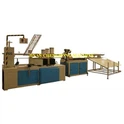
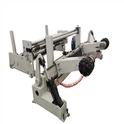
A roll cutting machine, also known as a slitting machine, is a crucial piece of equipment in various industries, including paper, plastic, textile, and metal. As a supplier of roll cutting machines, I am often asked about the working principle of these machines. In this blog post, I will explain how a roll cutting machine works, its components, and the different types available.
Basic Working Principle
The primary function of a roll cutting machine is to cut a large roll of material into narrower rolls or strips. The process involves several key steps: unwinding, slitting, and rewinding.
Unwinding
The process starts with the unwinding of the large master roll. The master roll is placed on an unwinding unit, which can be either a simple shaft or a more sophisticated pneumatic or hydraulic chuck system. The unwinding unit rotates to feed the material towards the slitting section. To ensure a smooth and consistent feed, tension control systems are employed. These systems can be mechanical, electrical, or a combination of both, and they maintain the appropriate tension on the material as it unwinds. This is crucial because improper tension can lead to wrinkling, uneven cutting, or even breakage of the material.
Slitting
Once the material is unwound, it enters the slitting section. This is where the actual cutting takes place. There are several methods of slitting, each with its own advantages and applications.
- Shear Slitting: This method uses a pair of circular blades, one on top and one on the bottom. The blades are positioned so that they overlap slightly, creating a shearing action as the material passes between them. Shear slitting is suitable for a wide range of materials, including paper, plastic films, and thin metals. It produces clean, burr - free edges and is often used for high - speed production lines.
- Score Slitting: In score slitting, a single blade is used to make a shallow cut or score on the surface of the material. The material is then broken along the scored line. This method is commonly used for materials that are too thick or too brittle for shear slitting, such as cardboard or heavy - duty plastics.
- Rotary Knife Slitting: Rotary knife slitting uses a rotating circular blade that cuts through the material. The blade can be either a straight blade or a serrated blade, depending on the material being cut. This method is ideal for materials that require a high degree of precision, such as adhesive tapes or photographic films.
Rewinding
After the material is slit into the desired widths, it is rewound onto individual cores. The rewinding unit consists of a series of shafts or chucks that hold the cores. Similar to the unwinding unit, the rewinding unit also has a tension control system to ensure that the slit strips are wound tightly and evenly. The tension during rewinding is carefully adjusted to prevent the strips from slipping or becoming loose. Additionally, the rewinding speed is synchronized with the unwinding and slitting speeds to maintain a continuous and efficient production process.
Components of a Roll Cutting Machine
A roll cutting machine is composed of several key components, each playing a vital role in the overall operation of the machine.
Unwinding Unit
As mentioned earlier, the unwinding unit holds the master roll and feeds the material into the machine. It typically includes a shaft or chuck system, a brake or clutch mechanism for tension control, and a drive system to rotate the roll. Some advanced unwinding units also feature automatic roll change systems, which can significantly reduce downtime during production.
Slitting Unit
The slitting unit contains the cutting blades and the mechanisms for adjusting their position and pressure. It is designed to provide precise and consistent cutting. The blades are usually made of high - quality steel or carbide to ensure long - term durability and sharpness. The slitting unit may also include a blade sharpening system to maintain the cutting performance of the blades over time.
Rewinding Unit
The rewinding unit is responsible for winding the slit strips onto cores. It consists of a series of shafts, chucks, and tension control devices. The rewinding unit can be configured to produce different types of rolls, such as single - layer rolls, multi - layer rolls, or rolls with different winding densities.
Control System
The control system is the brain of the roll cutting machine. It monitors and controls all aspects of the machine's operation, including the speed, tension, and position of the blades. Modern roll cutting machines are often equipped with programmable logic controllers (PLCs) and human - machine interfaces (HMIs), which allow operators to easily set and adjust the machine parameters. The control system also provides diagnostic functions, which can help identify and troubleshoot any issues that may arise during operation.
Types of Roll Cutting Machines
There are several types of roll cutting machines available, each designed to meet specific industry requirements.
Paper Roll To Roll Slitting Machine
This type of machine is specifically designed for cutting paper rolls. It is widely used in the paper industry for producing products such as toilet paper, tissue paper, and printing paper. Paper roll to roll slitting machines are often equipped with high - speed cutting systems and precise tension control to ensure the quality of the cut paper.
Rewinding Slitter Rewinding Machine
A rewinding slitter rewinding machine is used to slit and rewind materials such as plastic films, foils, and textiles. It can handle a wide range of material widths and thicknesses and is often used in the packaging, labeling, and textile industries. These machines are designed to provide high - quality rewinding with minimal waste.
Automatic Paper Roll Slitting Machine
Automatic paper roll slitting machines are fully automated systems that can perform all the functions of unwinding, slitting, and rewinding without the need for manual intervention. They are equipped with advanced sensors and control systems to ensure high - precision cutting and efficient production. These machines are ideal for large - scale paper production facilities.


Importance of Roll Cutting Machines in Industries
Roll cutting machines play a crucial role in many industries. In the paper industry, they are used to produce a wide variety of paper products, from books and magazines to packaging materials. By cutting large paper rolls into smaller, more manageable sizes, these machines enable efficient production and distribution.
In the plastic industry, roll cutting machines are used to produce plastic films for packaging, agriculture, and electronics. They can cut plastic films into different widths and lengths, allowing manufacturers to meet the specific requirements of their customers.
In the textile industry, roll cutting machines are used to cut fabric rolls into strips or pieces for clothing, home furnishings, and industrial applications. They ensure precise cutting and high - quality finished products.
Contact for Purchase and Negotiation
If you are in the market for a roll cutting machine, whether it's a Paper Roll To Roll Slitting Machine, a Rewinding Slitter Rewinding Machine, or an Automatic Paper Roll Slitting Machine, we are here to help. Our team of experts can provide you with detailed information about our products, assist you in choosing the right machine for your specific needs, and negotiate the best terms for your purchase. Don't hesitate to reach out to us for more information and to start the procurement process.
References
- Groover, M. P. (2010). Fundamentals of Modern Manufacturing: Materials, Processes, and Systems. Wiley.
- Schmid, S. M. (2012). Handbook of Plastic Films: Technology, Processing, Applications. William Andrew.
- Rao, P. N. (2007). Manufacturing Technology: Metal Cutting and Machine Tools. Tata McGraw - Hill Education.