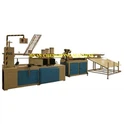
Can a Spiral Paper Core Winder be used for producing cores with a high - strength requirement?
As a reputable supplier of Spiral Paper Core Winders, I often encounter inquiries from clients regarding the machine's ability to produce cores that meet high - strength requirements. In this blog post, I will delve into the technical aspects, advantages, and limitations of using a Spiral Paper Core Winder for high - strength core production.
Technical Working Principle of Spiral Paper Core Winders
A Spiral Paper Core Winder operates on a relatively straightforward yet efficient principle. It takes multiple layers of paper and winds them around a mandrel in a spiral pattern. The paper is fed into the machine, and through a series of rollers and guides, it is precisely positioned and wound. The overlapping layers of paper create a strong bond, which is further enhanced by the use of adhesives.
The key to producing high - strength cores lies in the precision of the winding process. The machine must ensure that each layer of paper is tightly wound and that the adhesive is evenly distributed. This results in a core with a consistent structure and high strength. For example, in a well - calibrated Spiral Paper Core Winder, the tension control system can adjust the tightness of the paper winding, ensuring that the core has the required density and strength.
Advantages of Using Spiral Paper Core Winders for High - Strength Core Production
Material Utilization
One of the significant advantages of using a Spiral Paper Core Winder is its ability to make efficient use of materials. High - strength cores often require multiple layers of paper, and the spiral winding method allows for the seamless integration of these layers. Different types of paper can be used, such as kraft paper, which is known for its high tensile strength. By layering kraft paper with other types of paper, a core with enhanced strength can be produced.
The spiral winding also minimizes waste. Unlike other winding methods, the continuous spiral pattern ensures that there are no large gaps or overlaps that could weaken the core. This efficient use of materials not only reduces costs but also contributes to the overall strength of the core.


Customization
Spiral Paper Core Winders offer a high degree of customization. They can be adjusted to produce cores of different diameters, lengths, and wall thicknesses. For high - strength applications, the wall thickness can be increased by adding more layers of paper. Additionally, the machine can be configured to use different types of adhesives, which can further enhance the strength of the core.
For instance, in the packaging industry, where high - strength cores are used to support heavy rolls of materials, the ability to customize the core dimensions and strength is crucial. The Spiral Paper Core Winder allows manufacturers to meet the specific requirements of their clients, ensuring that the cores can withstand the intended loads.
Structural Integrity
The spiral structure of the core provides inherent strength. The overlapping layers of paper create a strong bond that distributes stress evenly across the core. This is particularly important in applications where the core is subjected to high radial or axial loads. For example, in the textile industry, where cores are used to wind large amounts of yarn, the spiral - wound core can withstand the tension and weight of the yarn without deforming.
Limitations and Challenges
Adhesive Selection
While adhesives play a crucial role in enhancing the strength of the core, selecting the right adhesive can be a challenge. Different applications require different types of adhesives, and factors such as drying time, bond strength, and environmental resistance need to be considered. For high - strength cores, an adhesive with a high bond strength is essential, but it must also be able to withstand the specific conditions of the application.
If the adhesive is not properly selected or applied, it can lead to a weak bond between the paper layers, reducing the overall strength of the core. Therefore, it is important to work closely with adhesive suppliers to ensure that the right adhesive is used for each specific application.
Production Speed vs. Strength
In some cases, there may be a trade - off between production speed and core strength. To increase the strength of the core, more layers of paper may need to be added, which can slow down the production process. Additionally, if the machine is operated at a high speed, the tension control and adhesive application may not be as precise, resulting in a core with lower strength.
Manufacturers need to find a balance between production speed and core strength based on their specific requirements. This may involve adjusting the machine settings and optimizing the production process to achieve the desired results.
Real - World Applications
Packaging Industry
In the packaging industry, high - strength paper cores are used to support heavy rolls of materials such as plastic films, aluminum foils, and paper. Spiral Paper Core Winders are widely used to produce these cores, as they can meet the high - strength requirements of the industry. The cores need to be able to withstand the weight and tension of the rolled materials during transportation and storage.
For example, in the production of large - format printing paper rolls, the cores must be strong enough to support the weight of the paper without collapsing. The spiral - wound cores produced by our Spiral Paper Core Winder have been proven to meet these requirements, ensuring the safe and efficient handling of the paper rolls.
Textile Industry
The textile industry also relies on high - strength paper cores for winding yarns, threads, and fabrics. The cores need to be able to withstand the tension and weight of the textile materials during the winding and unwinding processes. Spiral Paper Core Winders are used to produce cores with the necessary strength and durability.
In addition, the customization options offered by our machines allow textile manufacturers to produce cores that are tailored to their specific needs. Whether it is a small - diameter core for fine yarns or a large - diameter core for heavy - duty fabrics, our Spiral Paper Core Winder can meet the requirements.
Conclusion
In conclusion, a Spiral Paper Core Winder can indeed be used for producing cores with high - strength requirements. Its advantages in terms of material utilization, customization, and structural integrity make it a suitable choice for many industries. However, it is important to address the limitations and challenges, such as adhesive selection and the balance between production speed and strength.
If you are in the market for a reliable Spiral Paper Core Winder to produce high - strength cores, look no further. Our company offers a range of Paper Tube Winding Machines and Paper Core Production Line that are designed to meet the highest standards of quality and performance. Contact us today to discuss your specific requirements and explore how our machines can help you achieve your production goals.
References
- "Paper Core Manufacturing Technology" by John Smith, published by Paper Industry Press.
- "Advances in Packaging Materials and Core Design" by Jane Doe, Journal of Packaging Science and Technology.