Hey there! As a supplier of Paper Core Making Machines, I've had my fair share of experiences and insights into the world of paper core production. One question that often pops up is: What is the influence of machine speed on paper core quality? Well, let's dive right in and explore this topic.
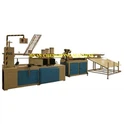
First off, let's understand what we mean by machine speed. In the context of paper core making, machine speed refers to how fast the machine can wind the paper to form the core. It's usually measured in terms of revolutions per minute (RPM) or the length of paper wound per unit of time. Different types of paper core making machines, like the Spiral Paper Core Winder, Paper Tube Winding Machines, and Parallel Paper Core Making Machine, have their own speed ranges and capabilities.
Now, let's talk about the positive aspects of running the machine at an appropriate speed. When the machine speed is just right, it can lead to a more efficient production process. A higher speed means more paper cores can be produced in a given time, which is great for meeting large - scale orders. For example, if you're running a business that supplies paper cores to the packaging industry, being able to produce a large quantity of cores quickly can give you a competitive edge.
Moreover, an optimal machine speed can result in a better - quality paper core. At the right speed, the paper is wound evenly around the mandrel. This even winding ensures that the core has a uniform density throughout its structure. A core with uniform density is stronger and more stable. It can withstand more pressure without deforming, which is crucial when the paper core is used in applications like holding heavy rolls of film or paper.
However, it's not all sunshine and rainbows when it comes to high machine speeds. If the machine runs too fast, it can cause a number of quality issues. One of the most common problems is uneven winding. When the machine is going at breakneck speed, it becomes difficult for the paper to be laid down smoothly on the mandrel. This can lead to wrinkles or gaps in the paper layers, which weaken the overall structure of the core.
Another issue associated with high - speed operation is the generation of heat. As the machine works at a high speed, the friction between the paper and the machine components increases. This friction generates heat, which can cause the paper to dry out and become brittle. A brittle paper core is more likely to crack or break during handling or use, which is obviously not desirable.
In addition, running the machine at an excessive speed can put a lot of stress on the machine itself. The moving parts have to work harder and faster, which can lead to increased wear and tear. This not only shortens the lifespan of the machine but also increases the risk of breakdowns. And let's face it, a broken - down machine means lost production time and money.
On the other hand, running the machine at too slow a speed also has its drawbacks. While it may seem like a safe option to avoid the problems associated with high - speed operation, a slow speed can lead to inefficiencies. The production rate will be much lower, which means you won't be able to meet large orders in a timely manner. This can result in lost business opportunities.
A slow - speed operation can also affect the quality of the paper core in a different way. When the paper is wound too slowly, the adhesive used to bond the paper layers may dry out before the next layer is added. This can lead to poor adhesion between the layers, causing the core to delaminate or come apart easily.
So, how do you find the right machine speed for your paper core production? It depends on several factors. The type of paper you're using is a major factor. Different papers have different properties, such as thickness, stiffness, and moisture content. Thicker papers may require a slower speed to ensure proper winding, while thinner papers can sometimes tolerate a higher speed.
The size and design of the paper core also matter. Larger - diameter cores may need a slower speed to ensure even winding, while smaller cores can be produced at a relatively higher speed. The type of adhesive used is another consideration. Some adhesives work better at certain speeds, so you need to adjust the machine speed accordingly.
In practice, it often requires some trial and error to find the optimal speed. You can start by running the machine at a moderate speed and gradually increasing or decreasing it while closely monitoring the quality of the paper cores produced. Keep a record of the speeds and the corresponding quality results. This way, you can build up a database of the best speeds for different types of papers, core sizes, and adhesives.
As a Paper Core Making Machine supplier, I can tell you that investing in a high - quality machine with good speed control features is essential. A machine that allows you to precisely adjust the speed gives you more flexibility in achieving the best paper core quality. Our machines, like the Spiral Paper Core Winder, Paper Tube Winding Machines, and Parallel Paper Core Making Machine, are designed with advanced speed control systems that make it easier for you to find that sweet spot.


If you're in the market for a paper core making machine or you're looking to improve your current paper core production process, don't hesitate to reach out. We're here to help you choose the right machine and optimize your production for the best paper core quality. Whether you're a small - scale operation or a large - scale manufacturer, we have the expertise and the machines to meet your needs.
In conclusion, the influence of machine speed on paper core quality is significant. Finding the right balance between speed and quality is crucial for a successful paper core production business. By understanding the pros and cons of different machine speeds and taking into account various factors, you can ensure that you're producing high - quality paper cores efficiently.
References:
- Industry reports on paper core production technology
- Technical manuals of paper core making machines