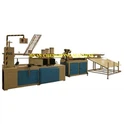
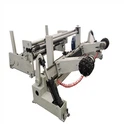
In the paper processing industry, the quality of paper cutting is of paramount importance, directly affecting the final product's appearance, performance, and market competitiveness. As a leading supplier of Paper Roll Slitters, we have been deeply involved in understanding the various factors that influence cutting quality. One such factor that often goes unnoticed but has a significant impact is the surface smoothness of the paper. In this blog, we will explore in detail how the paper's surface smoothness affects the cutting quality of a paper roll slitter.
Understanding Paper Surface Smoothness
Before delving into its impact on cutting quality, it's essential to understand what paper surface smoothness means. Surface smoothness refers to the evenness and uniformity of the paper's surface. It is typically measured in terms of the deviation of the surface from a perfectly flat plane. A smoother paper surface has fewer irregularities, such as bumps, ridges, or pores, while a rougher surface has more prominent deviations.
The smoothness of paper is influenced by several factors during the papermaking process. These include the type and quality of raw materials used, the refining process, the pressing and drying conditions, and the addition of various additives. Different paper grades and applications require different levels of surface smoothness. For example, high - quality printing papers often demand a very smooth surface to ensure sharp and clear print images, while packaging papers may have a relatively rougher surface depending on their specific requirements.
Impact on Cutting Precision
One of the most significant impacts of paper surface smoothness on the cutting quality of a paper roll slitter is on cutting precision. When the paper surface is smooth, the cutting blade can make contact with the paper more evenly. This even contact allows the blade to cut through the paper cleanly and accurately, resulting in straight and precise cuts.
On the other hand, a rough paper surface can cause the cutting blade to encounter uneven resistance. As the blade moves across the paper, it may be deflected by the bumps and ridges on the surface. This deflection can lead to deviations in the cutting path, resulting in uneven cuts, jagged edges, or even incomplete cuts. For instance, in applications where precise width and length dimensions are crucial, such as in the production of labels or envelopes, a lack of cutting precision due to rough paper surface can render the final products unusable.
Influence on Blade Wear
The surface smoothness of the paper also has a direct impact on the wear of the cutting blade. When cutting smooth paper, the blade experiences relatively consistent and low - friction contact with the paper. This means that the blade is subjected to less stress and abrasion during the cutting process, resulting in slower blade wear.
Conversely, a rough paper surface can cause the blade to experience intermittent high - stress points. The sharp edges of the bumps and ridges on the paper can act like abrasive particles, scraping against the blade surface. Over time, this can lead to accelerated blade wear, dulling the blade more quickly. A dull blade not only reduces the cutting quality but also requires more frequent blade replacements, increasing the overall operating costs of the paper roll slitter.
Effect on Cutting Force
The cutting force required to cut through the paper is another aspect affected by the paper's surface smoothness. Smooth paper generally requires less cutting force because the blade can glide through the paper more easily. This is beneficial for the operation of the paper roll slitter as it reduces the load on the cutting mechanism, extends the lifespan of the machine components, and improves energy efficiency.
In contrast, rough paper surfaces increase the cutting force requirements. The uneven contact between the blade and the paper creates additional resistance, forcing the machine to work harder to make the cut. Higher cutting forces can also lead to vibrations in the machine, which can further affect the cutting quality and potentially cause damage to other parts of the slitter.


Impact on Dust Generation
During the cutting process, the surface smoothness of the paper can influence the amount of dust generated. Smooth paper surfaces tend to produce less dust because the clean and even cut results in fewer paper fibers being broken or torn off. This is particularly important in industries where dust can cause problems, such as in the production of electronic components or food packaging, where dust contamination can affect the quality and safety of the final products.
Rough paper surfaces, however, are more likely to generate dust. The irregular cutting caused by the rough surface can break off small paper fibers, creating dust particles that can spread throughout the working environment. Excessive dust not only poses a health risk to the operators but also requires additional dust collection and filtration systems to maintain a clean and safe working environment.
Our Solutions as a Paper Roll Slitter Supplier
As a professional supplier of Paper Roll Slitters, we understand the importance of dealing with different paper surface smoothness levels to ensure optimal cutting quality. Our machines are designed with advanced features to adapt to various paper conditions.
For example, our slitting machines are equipped with adjustable cutting pressure systems. This allows operators to increase the cutting pressure when dealing with rough - surfaced papers to ensure clean and complete cuts. Additionally, we use high - quality cutting blades made from special alloys that are more resistant to wear, even when cutting rough papers.
We also offer a range of Filter Paper Roll Slitting Machines and Jumbo Roll Slitting Rewinding Machines that are specifically designed to handle different paper grades and surface smoothness. These machines are engineered to provide high - precision cutting, minimize blade wear, and reduce dust generation, regardless of the paper's surface characteristics.
Conclusion
In conclusion, the surface smoothness of the paper has a profound impact on the cutting quality of a paper roll slitter. It affects cutting precision, blade wear, cutting force, and dust generation. As a paper roll slitter supplier, we are committed to providing solutions that can overcome the challenges posed by different paper surface smoothness levels.
If you are in the paper processing industry and are looking for high - quality paper roll slitters that can ensure excellent cutting quality regardless of the paper's surface smoothness, we invite you to contact us for procurement and negotiation. Our team of experts will be happy to assist you in finding the most suitable slitting machine for your specific needs.
References
- "Handbook of Pulp and Paper Technology" by G. A. Smook
- "Paper Science and Technology" by J. P. Casey
- Industry research reports on paper processing and slitting technology