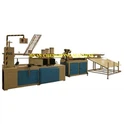
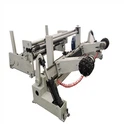
Hey there! As a supplier of Paper Tube Cutting Machines, I often get asked about the production capacity of these machines per hour. It's a crucial question for businesses looking to streamline their operations and boost productivity. In this blog, I'll break down the factors that influence the production capacity of a paper tube cutting machine and give you a better idea of what to expect.
Factors Affecting Production Capacity
First off, let's talk about the key factors that determine how many paper tubes a cutting machine can produce in an hour.
Machine Speed
The speed of the cutting machine is probably the most obvious factor. Different models come with varying cutting speeds, which are usually measured in cuts per minute. For example, some entry - level machines might make around 50 cuts per minute, while high - end ones can reach up to 200 cuts per minute or even more. If a machine makes 100 cuts per minute, that's 6000 cuts per hour. But keep in mind, this is just a raw number and doesn't account for other factors.
Tube Length and Diameter
The length and diameter of the paper tubes you're cutting also play a big role. Longer tubes generally take more time to cut because the cutting mechanism has to travel a greater distance. Similarly, larger - diameter tubes can be more challenging to cut cleanly and quickly. A machine might be able to handle a high volume of small - diameter, short tubes but will have a lower production capacity when dealing with large - diameter, long tubes.
Material Thickness
The thickness of the paper used to make the tubes affects production capacity too. Thicker paper requires more force to cut, which can slow down the cutting process. A machine that can zip through thin - walled tubes might struggle to maintain the same speed when cutting thick - walled ones.
Automation Level
Automated machines are generally faster than manual or semi - automated ones. An Automatic Paper Core Cutting And Conveying Production Line can feed the tubes, make the cuts, and even stack the finished products without much human intervention. This reduces the time between cuts and can significantly increase the hourly production capacity. On the other hand, a manual machine requires an operator to load the tubes, make the cut, and remove the finished piece, which takes more time.
Real - World Production Capacity Examples
Let's look at some real - world scenarios to get a better sense of what kind of production capacity you can expect.
Small - Scale Operations
For a small business that makes custom - sized paper tubes, say for packaging small items like jewelry or cosmetics, they might use a relatively basic Paper Pipe Cutting Machine. If the tubes are short (around 5 - 10 cm) and have a small diameter (less than 5 cm), and the paper is of average thickness, a machine with a cutting speed of 80 cuts per minute could produce around 4800 tubes per hour. However, if the tubes are longer or have a larger diameter, the production capacity might drop to 3000 - 3500 tubes per hour.
Medium - Scale Production
A medium - sized factory that produces standard - sized paper tubes for industrial use, such as for winding wires or tapes, might invest in a more advanced machine. A High Speed Cutting Machine for Paper Tube with a cutting speed of 150 cuts per minute can produce a large number of tubes. If the tubes are of a common size, say 20 cm long and 8 cm in diameter, and the paper is of medium thickness, the machine could potentially produce around 9000 tubes per hour. But again, this depends on how well the feeding and stacking processes are optimized.
Large - Scale Manufacturing
In a large - scale manufacturing plant, where efficiency is key, an automated production line can achieve extremely high production capacities. With all the processes streamlined, from tube feeding to finished product stacking, a state - of - the - art machine can produce upwards of 15,000 tubes per hour, especially if the tubes are of a standard size and the paper is of consistent quality.


How to Maximize Production Capacity
If you're looking to get the most out of your paper tube cutting machine, here are some tips:
Regular Maintenance
Keep your machine well - maintained. A machine that's in good working condition will operate at its optimal speed. This includes cleaning the cutting blades regularly, lubricating moving parts, and checking for any signs of wear and tear.
Optimize Tube Design
If possible, design your paper tubes to be as easy to cut as possible. Choose standard sizes and avoid overly long or large - diameter tubes if your production volume is a priority.
Train Your Operators
If you're using a semi - automated or manual machine, make sure your operators are well - trained. A skilled operator can reduce the time between cuts and handle any issues that might arise during the cutting process more efficiently.
Contact Us for Your Paper Tube Cutting Needs
If you're in the market for a paper tube cutting machine and want to know more about the production capacity that suits your business, we're here to help. Whether you're a small startup or a large - scale manufacturer, we have a range of machines to meet your requirements. Don't hesitate to reach out and start a conversation about how we can boost your paper tube production.
References
- Industry reports on paper tube manufacturing
- Manufacturer's specifications for paper tube cutting machines
- Case studies from paper tube production facilities